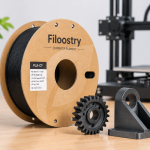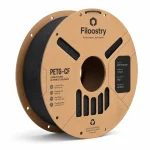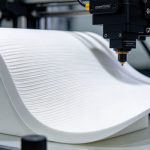
PLA-CF filament combines a PLA-based polymer with carbon fiber reinforcement, offering a distinctive matte finish and increased rigidity for FDM 3D printing.
At Filoostry, we focus on practical details that help users get the most from our PLA-CF filament. Here are answers to common questions about product specifications, material preparation, and printing performance.
What Are the Specifications of Filoostry PLA-CF Filament?
Understanding filament dimensions and spool specifications helps ensure compatibility with your 3D printer and filament storage system.
What are the spool dimensions and material?
| Items | Measurement |
|---|---|
| Net weight | 1000g |
| Diameter | 1.75±0.03 mm |
| Length | 333 ± 5 m |
| Outer diameter | 200 mm |
| Core diameter | 88.5 mm |
| Overall width | 65.5 mm |
| Flange width | 58 mm |
| Empty spool weight | 146 ± 1 g |
Check your printer’s spool holder dimensions before loading the filament. The 200 mm outer diameter and 65.5 mm overall width are important when confirming physical clearance.
How Should I Dry and Store PLA-CF Filament?
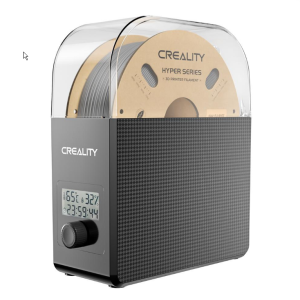
What is the recommended drying temperature and time?
Moisture affects extrusion consistency and printed surface quality. PLA-CF should be properly dried before printing, recommended to dry at 55° C for 6 to 12 hours.
Should I dry PLA-CF again after opening the package?
Yes, when the filament has absorbed moisture during storage or exposure. Signs of moisture-related problems include popping sounds during extrusion, small surface bubbles, rough extrusion, and inconsistent print appearance.
After printing, return the spool to a sealed moisture-resistant bag or dry storage box with desiccant. Proper storage helps maintain consistent filament condition between printing sessions.
Which Nozzle and Temperature Settings Work Best for PLA-CF?
Nozzle material and extrusion temperature directly influence how carbon fiber reinforced filament passes through the hotend.
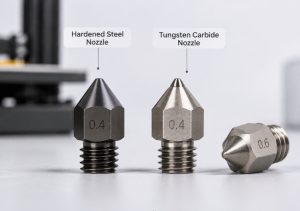 Which nozzle material and diameter should I use?
We recommend hardened steel or tungsten carbide nozzles because carbon fiber reinforcement gradually wears standard brass nozzles. Our recommended nozzle diameters are 0.4 mm, 0.6 mm, and 0.8 mm.
A 0.4 mm nozzle supports finer details, while 0.6 mm and 0.8 mm nozzles provide larger extrusion openings for different model geometries. Select the nozzle according to the required level of detail and your printer’s capabilities.
What nozzle temperature should I set?
The recommended nozzle temperature for Filoostry PLA-CF is 200–230°C. Start within this range and evaluate extrusion consistency, layer bonding, and surface appearance. Adjust the temperature according to your hotend, printing speed, and model geometry.
Avoid selecting a temperature outside the recommended range without first confirming material compatibility.
How Do Print Speed and Cooling Affect PLA-CF Results?
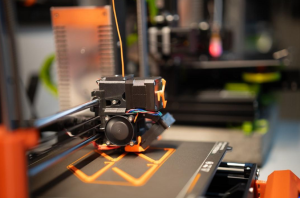
Printing speed and cooling need to work together. Increasing speed raises the amount of filament the hotend must melt and extrude, while cooling influences how quickly deposited layers solidify.
 What printing speed should I use?
Our recommended printing speed range is 30–300 mm/s, with a volumetric flow range of 3–32 mm³/s. These are supported parameter ranges rather than a guarantee that every printer can achieve the maximum values.
For detailed models and complex geometries, prioritize stable extrusion over maximum speed. For larger models, increase speed gradually while monitoring extrusion consistency and surface quality.
What cooling fan setting should I choose?
The recommended cooling fan range is 50–100%. Use the slicer’s cooling settings to balance overhang quality, bridging performance, and layer bonding. Smaller details and bridges require effective cooling, while larger structural sections need sufficient time and temperature for proper layer adhesion.
What Build Plate and Printer Setup Should I Use?
The build plate and printer configuration influence first-layer adhesion and printing stability.
 Does PLA-CF work with an open-frame 3D printer?
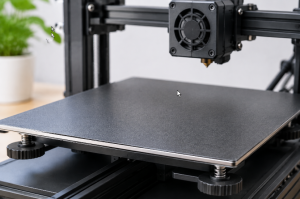
Yes. Our recommended printer configurations include both open-frame and enclosed FDM printers. The important requirements are a compatible hotend, suitable nozzle, stable extrusion, and a build plate that supports the recommended printing temperature.
What bed temperature should I use with a PEI plate?
For PEI build plates, our recommended bed temperature is 55–65°C. Keep the build surface clean and level before printing. A consistent first layer provides a stable foundation for the remaining model and helps reduce adhesion-related defects.
Our PLA-CF filament also supports annealing at 55–60°C for 6–12 hours. This process should be evaluated on a sample first because heat treatment can cause dimensional changes. Measure critical dimensions before and after treatment to confirm suitability for the intended application.
Print with Confidence with Filoostry PLA-CF
At Filoostry, we focus on making filament specifications and printing requirements clear and practical. From the 1.75 mm filament diameter and spool dimensions to nozzle selection, drying conditions, and extrusion settings, every detail contributes to a more consistent printing experience.
Our PLA-CF filament supports customized models, detailed components, and functional FDM projects. Start with the recommended settings, understand your printer’s capabilities, and fine-tune the profile to achieve reliable printing results.