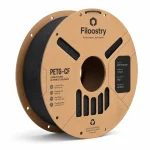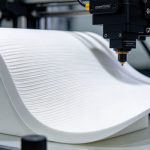
What Is PETG-CF Filament?
PETG-CF filament is a carbon fiber reinforced PETG material designed for FDM 3D printing. It combines a PETG polymer base with short carbon fibers to improve stiffness, rigidity, and dimensional stability.
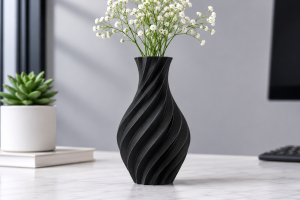 Compared with standard PETG, PETG-CF typically produces a distinctive matte surface finish and more rigid printed parts. It is suitable for functional components, structural supports, jigs, fixtures, and customized mechanical parts.
What Are the Advantages of PETG-CF Compared with Regular PETG?
Compared with standard PETG filament, PETG-CF offers several advantages for functional 3D printing.
- Higher Rigidity: Carbon fiber reinforcement increases stiffness, helping printed parts maintain their shape under mechanical loads.
- Improved Dimensional Stability: The fiber reinforcement can reduce material shrinkage and warping during printing, supporting more consistent dimensions.
- Matte Surface Finish: PETG-CF produces a distinctive textured appearance that gives printed components a professional, industrial look.
- Functional Performance: Its combination of stiffness and dimensional stability makes it suitable for brackets, mounting components, and mechanical fixtures.
However, increased rigidity does not necessarily mean improved impact resistance or toughness. Actual mechanical performance depends on the material formulation, printing parameters, and part design.
Do I Need a Hardened Steel Nozzle to Print PETG-CF?
Yes. A hardened steel nozzle or another wear-resistant nozzle is recommended for printing PETG-CF.
Carbon fibers are abrasive and can gradually wear down standard brass nozzles. As the nozzle wears, its internal diameter may increase, potentially affecting extrusion accuracy and print quality.
For reliable printing:
- Use a hardened steel or other wear-resistant nozzle.
- A nozzle diameter of at least 0.4 mm is generally recommended.
- A 0.6 mm nozzle can be a practical choice for reducing clogging risks, especially when printing larger functional parts.
- Regularly inspect the nozzle for signs of wear.
Choosing a suitable nozzle helps maintain consistent extrusion and extends the service life of your printing equipment.
Does PETG-CF Filament Need to Be Dried Before Printing?
Yes. Drying PETG-CF before printing is recommended, especially if the filament has been exposed to humid conditions or stored for an extended period.
Moisture absorbed by the filament can cause stringing, bubbling, uneven extrusion, and surface defects. It may also affect the consistency and mechanical performance of printed parts.
For better printing results:
- Dry the filament according to the manufacturer’s recommended temperature and duration.
- Store unused PETG-CF in a sealed bag or airtight container with desiccant.
- Use a dry box to help maintain low moisture levels during longer printing jobs.
- If the filament has absorbed significant moisture, allow additional drying time according to the manufacturer’s guidelines.
Proper storage and moisture control help maintain filament quality and achieve more consistent printing results.
What Can You Make with PETG-CF Filament?
PETG-CF is suitable for producing a variety of functional and customized 3D printed components.
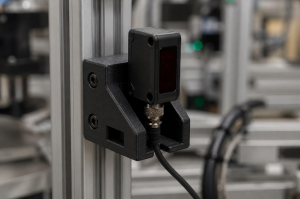
Common applications include:
- Industrial Components: Brackets, mechanical connectors, mounting parts, and equipment housings that require good rigidity and dimensional stability.
- Jigs and Fixtures: Custom positioning tools, assembly aids, and workshop fixtures designed for repeated use.
- Functional Supports: Structural supports and customized mounting components used in equipment and mechanical assemblies.
PETG-CF is particularly useful when lightweight construction, stiffness, and dimensional consistency are important. The final application should always be evaluated according to its actual mechanical loads, operating temperature, and environmental conditions.
Is PETG-CF Suitable for Functional and Industrial Applications?
Yes. PETG-CF can be considered for functional prototypes, mechanical accessories, equipment components, and customized industrial parts.
Its carbon fiber reinforcement provides increased rigidity and dimensional stability compared with standard PETG, making it useful for components that need to maintain their shape during everyday operation.
However, material selection should be based on the specific requirements of each application, including:
- Mechanical Loads: Consider the expected force, impact, and direction of loading.
- Operating Temperature: Check the material’s heat deflection temperature (HDT) and actual working conditions.
- Part Geometry: Wall thickness, infill density, and structural design influence the performance of printed components.
- Printing Orientation: Layer direction affects mechanical properties, particularly Z-axis strength and layer adhesion.
For applications involving high temperatures, heavy loads, or demanding mechanical conditions, materials such as PA-CF or PEEK may be worth considering, depending on the required performance and printer capabilities.
Still have questions about PETG-CF filament? Contact the 3D-FIL team for material information, technical specifications, and application recommendations.