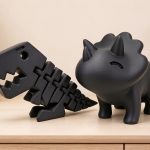
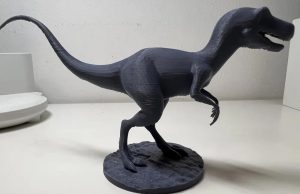
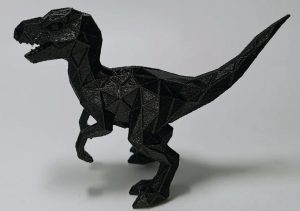
What happens when a prehistoric creature meets modern 3D printing technology? We turned this idea into reality by creating a dinosaur model using PETG-CF filament (3D Printed Dinosaur).
This project is more than just a decorative print. It demonstrates how carbon fiber reinforced PETG can combine distinctive material aesthetics with the design flexibility of FDM 3D printing, bringing detailed 3D models to life.
From Digital Design to a 3D Printed Dinosaur
Dinosaur models are interesting 3D printing projects because their distinctive shapes, body structures, and surface details provide an opportunity to explore the capabilities of FDM printing.
From the overall body shape to smaller structural details, every part contributes to the final appearance of the model.
Using PETG-CF filament, we transformed a digital dinosaur design into a physical model, demonstrating how an engineered composite filament can be used beyond conventional functional components.
Why Choose PETG-CF Filament?
PETG-CF is a carbon fiber reinforced PETG material that combines a PETG polymer matrix with carbon fiber reinforcement.
Compared with standard PETG, carbon fiber reinforcement generally improves material stiffness and dimensional stability while creating a distinctive surface appearance. These characteristics make PETG-CF an interesting option for both functional prints and visually distinctive models.
For this dinosaur project, PETG-CF was selected for several reasons:
| 1. Distinctive Carbon Fiber Texture | Carbon fiber reinforcement gives the printed model a characteristic textured appearance. Depending on the filament formulation and printing conditions, it can create a more technical and refined surface finish than conventional PETG. |
| 2. Improved Rigidity | The addition of carbon fibers increases the stiffness of PETG, helping printed parts maintain a more rigid structure. This makes PETG-CF suitable for models where structural feel and dimensional consistency are important. |
| 3. Versatile Printing Applications | PETG-CF is not limited to industrial components. It can also be used for decorative models, customized objects, prototypes, and creative 3D printing projects. |
PETG-CF Printing Considerations
- Nozzle Wear: Carbon fiber reinforced filaments are abrasive and can accelerate nozzle wear during extended FDM 3D printing. Using a hardened steel or other wear-resistant nozzle is generally recommended for PETG-CF filament.
- Nozzle Diameter: Select an appropriate nozzle diameter based on the filament formulation, fiber characteristics, and 3D printer manufacturer’s recommendations to support consistent material extrusion.
- Printing Temperature: Follow the recommended printing temperature range specified in the PETG-CF filament technical data sheet (TDS). Proper temperature settings help maintain stable extrusion and consistent print quality.
- Filament Drying and Storage: Proper filament drying and storage are important for maintaining consistent FDM printing performance. Follow the material manufacturer’s recommendations based on the filament’s moisture sensitivity and processing requirements.
- Printing Orientation: Model orientation affects support requirements, surface finish, and layer bonding direction. Optimizing print orientation can help improve the overall quality and structural characteristics of PETG-CF printed parts.
Exploring the Possibilities of PETG-CF 3D Printing
This dinosaur model demonstrates that carbon fiber reinforced filaments have applications beyond traditional engineering parts.
With the design flexibility of FDM 3D printing, PETG-CF can be explored in a variety of applications, including:
- Decorative models and collectible figures
- Customized home and desk accessories
- Functional prototypes
- Mechanical housings and structural components
- Creative designs with distinctive surface textures
The combination of material characteristics and design freedom creates more possibilities for 3D printing applications.
Turning Materials into Real-World Applications
At Filoostry®, we believe that a 3D printing material should be evaluated not only by its technical specifications but also by what it can achieve in actual printing applications.
This PETG-CF dinosaur project is one example of how we explore the performance and versatility of our materials through real printing experiments.
From carbon fiber reinforced filaments to other advanced 3D printing materials, we continue to develop material solutions that support makers, designers, and industrial users in bringing their ideas to life.
Great materials create more possibilities.