From Digital Dental Models to Customized Dental Solutions
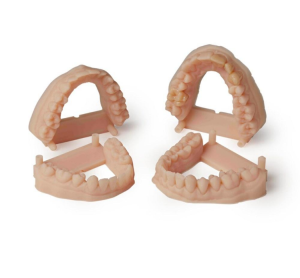
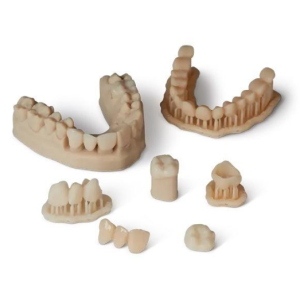
3D printed dental products are changing how dental professionals approach diagnosis, treatment planning, and restoration productionFrom dental models and surgical guides to crowns, bridges, and customized dentures.
Traditional dental manufacturing often involves multiple manual steps, including impression making, model casting, and physical adjustments.
With the integration of intraoral scanning, CAD design, and 3D printing, dental professionals can now transform digital patient data into accurate physical products with greater flexibility and efficiency.
Behind this transformation is photopolymerization 3D printing technology, which uses light to selectively cure liquid resin layer by layer. Among the technologies commonly used in digital dentistry, SLA, DLP, and LCD stand out for their ability to produce detailed dental components and customized models.
Although they share a similar printing principle, their light sources, imaging methods, and production capabilities differ. Understanding these differences helps dental laboratories and clinics select the right technology for specific applications.
How Does 3D Printing Benefit Modern Dentistry?
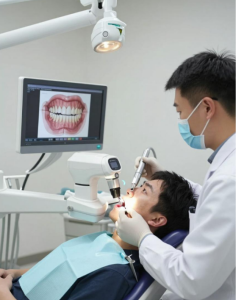
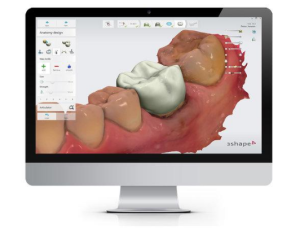
Dental 3D printing connects digital design with physical production. A typical workflow starts with intraoral scanning or dental imaging, followed by CAD modeling and preparation of the digital file for printing.
Once the design is ready, a suitable printer and dental resin are selected to produce the required component.
This workflow brings several practical benefits:
-
Patient-specific customization: Dental products can be designed according to individual oral structures and treatment requirements.
-
Improved production efficiency: Digital workflows reduce dependence on some traditional manual fabrication steps.
-
Detailed reproduction: Light-based printing technologies can reproduce complex dental structures and fine geometric features.
-
Flexible production: Dental laboratories can produce different models, guides, and restorations according to their workload.
Rather than replacing every traditional dental manufacturing method, 3D printing provides another production option that supports more flexible and digitally integrated dental workflows.
Three Main Dental 3D Printing Technologies: SLA, DLP, and LCD
| item | Key advantages | Typical dental applications | |
| SLA – Stereolithography | 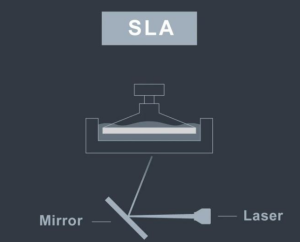 |
|
Dental models, implant surgical guides, provisional restorations, and other detailed dental components. |
| DLP – Digital Light Processing | 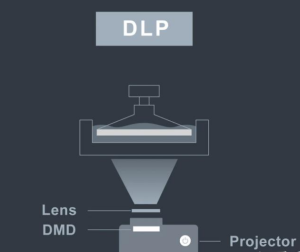 |
|
Dental crowns and bridges, orthodontic models, surgical guides, and provisional restorations. |
| LCD – Liquid Crystal Display | 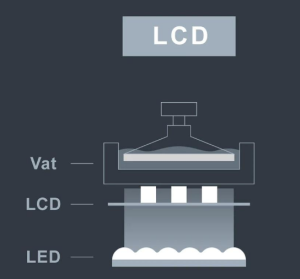 |
|
Dental study models, diagnostic models, orthodontic models, and selected provisional dental components when supported by validated materials and workflows. |
SLA, DLP, and LCD all belong to vat photopolymerization technology. They use light to cure photosensitive resin, but the way light is delivered and controlled is different.
SLA uses a focused laser beam to selectively cure liquid resin. The laser scans the cross-sectional pattern of each layer, gradually building the dental component.
SLA is particularly useful in workflows that prioritize surface quality and detailed structures. However, its point-by-point laser scanning process can make production slower than full-layer exposure methods, depending on the printer and model configuration.
DLP uses a digital projector, typically with a digital micromirror device (DMD), to project an entire layer image onto the resin surface. Instead of scanning individual points, it cures multiple areas simultaneously.
DLP is especially useful for dental laboratories that need a balance of precision and production efficiency. It can help improve throughput when producing multiple components in one printing job.
LCD, also known as masked stereolithography (MSLA), uses a UV light source and an LCD screen as a mask. The screen controls which areas of light pass through to cure each resin layer.
LCD provides an accessible option for dental laboratories and clinics looking to integrate resin 3D printing into their production process without the higher equipment investment associated with some professional systems.
Importantly, LCD performance varies with screen resolution, pixel size, optical design, and exposure settings. It should not automatically be considered less accurate than every DLP or SLA printer.
SLA vs. DLP vs. LCD: What Are the Main Differences?
Although all three technologies use light-curing resin, their different exposure systems influence printing speed, detail reproduction, equipment costs, and production flexibility.
The following table summarizes their main characteristics in dental applications.
| Comparison | SLA | DLP | LCD |
|---|---|---|---|
| Light source | Laser | Digital projector | UV LED + LCD screen |
| Curing method | Point-by-point scanning | Whole-layer projection | Whole-layer masked exposure |
| Detail reproduction | High | High | Depends on screen resolution |
| Surface quality | Excellent | Very good to excellent | Good to very good |
| Printing efficiency | Depends on scanning area | Efficient layer exposure | Efficient layer exposure |
| Equipment cost | Often higher | Moderate to high | Generally more affordable |
| Main advantage | Fine details and surface finish | Precision and production efficiency | Cost-effectiveness and accessibility |
| Typical application | Surgical guides and detailed models | Crowns, bridges and orthodontic models | Study and diagnostic models |
Note: These are general technology characteristics, not guaranteed performance rankings. Actual results depend on printer specifications, resin formulation, layer thickness, calibration, and post-processing.
Which Technology Is Better for Different Dental Applications?
The three technologies are not restricted to completely separate dental fields. Their applications overlap, and the best choice depends on the required product, material certification, and production requirements.
| Dental application | Commonly used technology | Why it is suitable |
|---|---|---|
| Implantology | SLA / DLP | Detailed surgical guides support accurate implant planning and positioning. |
| Orthodontics | SLA / DLP / LCD | Efficient production of customized dental models for diagnosis and appliance workflows. |
| Prosthodontics | SLA / DLP | Supports the production of crowns, bridges, and provisional restorations using suitable dental resins. |
| Dental diagnostics | DLP / LCD / SLA | Enables the production of physical study models for examination and treatment planning. |
For example, implantology requires carefully designed surgical guides that correspond to a patient’s anatomical structure. SLA and DLP can support the production of these detailed components.
In orthodontics, multiple dental models may be required for treatment planning and aligner-related workflows. DLP and LCD can provide efficient layer exposure, making them useful options for producing batches of models.
In prosthodontics, specialized dental resins allow suitable printers to fabricate provisional crowns, bridges, and denture-related components. The selected material must meet the requirements of its intended clinical use.
How to Choose the Right 3D Printing Technology for Dental Production?
There is no single printing technology that is best for every dental application. Dental professionals should consider several factors before selecting equipment.
-
For fine details and surface quality: SLA is worth considering for detailed dental structures and customized guides.
-
For production efficiency: DLP is a strong option for laboratories that need to produce multiple dental components efficiently.
-
For cost-conscious production: LCD offers an accessible solution for diagnostic and orthodontic model production.
Beyond the printer itself, resin selection is equally important. Different applications require different material properties, such as strength, flexibility, dimensional stability, and biocompatibility.
For products intended for clinical use, dental professionals should also consider regulatory compliance, validated washing and post-curing procedures, and the manufacturer’s recommended printing parameters. A high-resolution printer alone does not guarantee a clinically suitable final product.
The Future of 3D Printing in Digital Dentistry
As intraoral scanning, CAD software, and resin printing technologies continue to develop, 3D printing is becoming an increasingly important part of digital dental workflows.
Future development will focus not only on improving printing speed and accuracy but also on expanding dental resin options, improving material performance, and making production processes more standardized.
SLA, DLP, and LCD each offer different advantages. SLA supports detailed fabrication, DLP provides efficient layer exposure, and LCD offers a more accessible approach to resin printing.
Together, these technologies are helping dental clinics and laboratories move toward more customized, efficient, and digitally integrated production.