A Wrench Made with More Than Ordinary Filament
Wrenches are widely used in workshops, equipment maintenance, and mechanical assembly. Metal remains the standard material for tools that handle high torque and demanding mechanical loads. However, FDM 3D printing brings another approach to customized tools and auxiliary components.
This wrench is printed using PETG-CF filament, a carbon fiber reinforced PETG material. By combining a thermoplastic base with carbon fiber reinforcement, PETG-CF delivers a different balance of weight, stiffness, and dimensional stability compared with conventional PETG.
For this printed wrench, material selection directly influences the component’s rigidity, geometry, and overall function. We use PETG-CF to explore how reinforced filament translates into practical workshop tools and customized functional parts.
The Material Advantage Behind PETG-CF
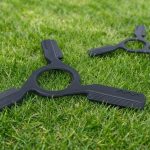
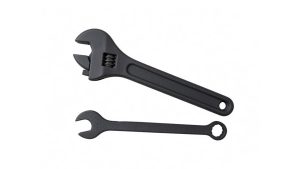 A wrench printed with PETG-CF filament
What distinguishes PETG-CF is how carbon fiber reinforcement changes the mechanical and printing characteristics of the original polymer.
A Balance Between Weight and Rigidity
Carbon fiber reinforcement increases material stiffness while maintaining a relatively low density compared with metal. This combination suits lightweight tool accessories, support components, and customized equipment parts that require structural rigidity without unnecessary weight.
A Material for Customized Production
PETG-CF works with FDM 3D printing, giving us direct control over component dimensions, mounting structures, and geometries without traditional molds. We design parts around specific equipment dimensions and application requirements, making the material suitable for functional prototypes, replacement accessories, and small-batch production.
What Else Can PETG-CF Be Used to Make?
Our PETG-CF applications extend beyond wrenches. Its combination of stiffness, dimensional stability, and relatively low weight supports different types of functional products.
| Printed product | Application | Material advantage |
|---|---|---|
| Tool holders and workshop organizers | Custom tool storage | Rigid structures and customized dimensions |
| Mounting brackets and equipment fixtures | Equipment installation and positioning | Structural stiffness and dimensional consistency |
| Functional mechanical components | Workshop and equipment assembly | Custom geometries and lightweight construction |
For example, tool holders and workshop organizers accommodate specific tool sizes and storage layouts. Mounting brackets and equipment fixtures provide customized installation and positioning solutions around individual equipment dimensions.
With FDM printing, we modify designs and reproduce components without investing in dedicated molds. This makes PETG-CF a practical material for customized designs and limited production runs.
From Workshops to Industrial Applications
Beyond individual tools, PETG-CF serves several functional applications across different working environments.
Workshop and Equipment Maintenance
In workshops and maintenance facilities, we use PETG-CF for customized tool accessories, storage components, and non-critical replacement parts. Its increased stiffness supports components that need to retain their shape, while its relatively low weight keeps auxiliary equipment lightweight.
Industrial Equipment and Mechanical Assembly
For industrial equipment, PETG-CF suits auxiliary mounting brackets, positioning fixtures, and customized equipment accessories. FDM printing allows us to match specific equipment layouts, while carbon fiber reinforcement increases stiffness compared with unfilled PETG formulations.
Product Development and Prototyping
During product development, designers need to evaluate different shapes, dimensions, and assembly arrangements. PETG-CF enables us to produce functional prototypes and assess component fit, structural design, and assembly compatibility before selecting a final manufacturing process.
The final application must match the material’s mechanical properties, operating temperature, and environmental requirements.
What should be noted when printing?
Key printing considerations:
- Filament preparation: Dry the filament before printing to reduce moisture-related bubbles, surface defects, and inconsistent extrusion.
- Nozzle selection: Carbon fiber reinforcement wears standard brass nozzles. A hardened steel nozzle with a 0.6 mm opening provides better abrasion resistance and extrusion clearance.
- Part orientation: Print the wrench flat on the build plate, keeping the handle and jaw profile within the XY plane to align the primary in-plane load path with the printed layers.
- Structural design: Use sufficient wall thickness and appropriate infill to support the handle and jaw geometry. Increasing infill alone does not guarantee higher strength.
Why Consider PETG-CF for Custom Tool Production?
PETG-CF combines carbon fiber reinforcement, relatively low component weight, and FDM printing flexibility. These characteristics support customized tools, workshop accessories, equipment fixtures, and functional prototypes.
For manufacturers and 3D printing users, PETG-CF provides a direct route to producing application-specific plastic components. Its dimensional stability and stiffness support designs that require consistent geometry, while FDM technology simplifies design modifications and small-batch production.
We focus on matching filament properties with real product requirements. The right material, print orientation, and structural design work together to determine the performance of a finished component.
Discover Functional 3D Printing with Filoostry
At Filoostry, we focus on practical filament applications, from customized workshop tools to mechanical brackets and functional prototypes.